

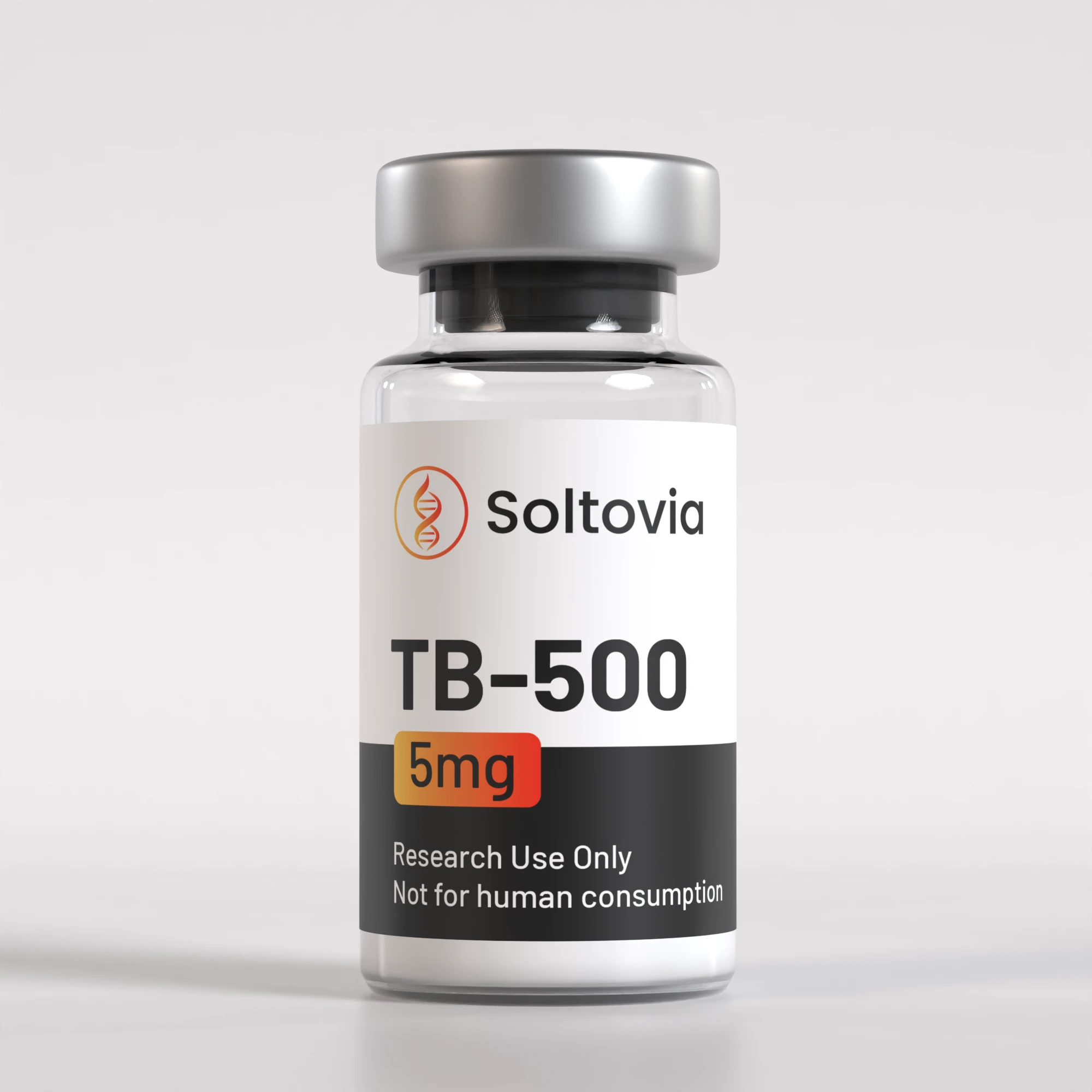
TB-500 5MG
TB-500 5MG is a synthetic research peptide supplied exclusively for controlled laboratory and analytical investigations involving molecular characterization, peptide-associated cellular signaling pathways, cytoskeletal regulation, and experimental assay characterization.
$45.00
Satisfaction Guaranteed
Secure
Payment
Third-party
Tested
Research Use Disclaimer
Research Use Only: All products offered are intended strictly for laboratory research purposes. Products are not for human consumption and are not intended for diagnostic, therapeutic, or medical use. By purchasing from our website, customers confirm they are qualified researchers or laboratories and understand the intended research-use designation.
TB-500 5MG
TB-500 5MG is a synthetic research peptide supplied exclusively for controlled laboratory and analytical investigations involving molecular characterization, peptide-associated cellular signaling pathways, cytoskeletal regulation, and experimental assay characterization.
Research Context
TB-500 is a research peptide commonly associated with Thymosin Beta-4 (Tβ4), a naturally occurring peptide investigated in laboratory research involving actin regulation, cellular communication, cytoskeletal organization, and experimental tissue-biology models. Thymosin Beta-4-associated research examines molecular pathways related to actin dynamics, extracellular matrix interactions, and cellular regulatory processes. The precise research properties of TB-500 depend on whether the supplied material contains full-length Thymosin Beta-4 or a specific peptide fragment.
Laboratory Research Information
Laboratory studies may examine molecular identification, peptide stability, actin-associated molecular interactions, cellular signaling mechanisms, and experimental assay behavior. Research may also involve analytical characterization, cytoskeletal regulatory pathways, extracellular matrix-associated processes, and peptide-specific biochemical interactions under controlled conditions. Observations should be interpreted within the design and limitations of the relevant experimental study.
Product Specifications
| Specification | Details |
|---|---|
| Product Name | TB-500 5MG |
| Brand | Soltovia |
| Alternative Name | TB-500 / Thymosin Beta-4-Associated Research Peptide |
| Compound Type | Synthetic research peptide |
| Research Profile | Actin regulation, cytoskeletal organization, and cellular signaling research |
| Peptide Form | Confirm full-length or fragment form against product COA |
| Molecular Weight | Dependent on verified peptide sequence and chemical form |
| Molecular Formula | Dependent on verified peptide sequence |
| CAS Number | Refer to verified compound specifications |
| Research Classification | Thymosin Beta-4-associated research peptide |
| Research Pathways | Actin-associated molecular processes, cellular signaling, and cytoskeletal regulation |
| Available Size | 5MG |
| Purity | Refer to batch-specific COA |
| Testing Method | Refer to batch-specific COA |
| Laboratory | Refer to batch-specific COA |
For laboratory research use only. Not for human or veterinary use. This material does not provide medical or consumer-use guidance.

Research COntent
Compound Classification & Structure
TB-500 is a synthetic peptide containing the primary active sequence (LKKTETQ) of Thymosin Beta-4, an actin-sequestering protein found ubiquitously across mammalian cellular tissue.
Mechanisms of Action
- Actin Polymerization Regulation: Sequesters G-actin monomers, orchestrating cellular motility, cytoskeletal remodeling, and rapid cell migration to damaged tissue sites.
- Angiogenesis & Endothelial Signaling: Upregulates vascular endothelial growth factor (VEGF) and basic fibroblast growth factor (bFGF), promoting capillary morphogenesis.
- Downregulation of Pro-Fibrotic Factors: Demonstrates inhibition of myofibroblast differentiation and TGF-beta signaling, suppressing excessive collagenous scar formation.
Key Research Literature
- Accelerated dermal re-epithelialization and tensile strength recovery observed in cutaneous wound and tendon injury models.
- Demonstrates cardioprotective and cytoprotective properties during hypoxic stress in experimental models.
• Annals of the New York Academy of Sciences: “Thymosin beta-4: Actin-regulation, wound healing, and tissue regeneration.”
• FASEB Journal: “Thymosin beta-4 induces cellular migration and angiogenesis via microfilament regulation.”
Related Peptides
Related products
-
LABORATORY DILUENT
$12.00Earn up to 6 points. This product has multiple variants. The options may be chosen on the product page -
GHK-CU 100MG
$45.00 -
MOTS-C 10MG
$45.00 -
BPC-157-10MG
$40.00