

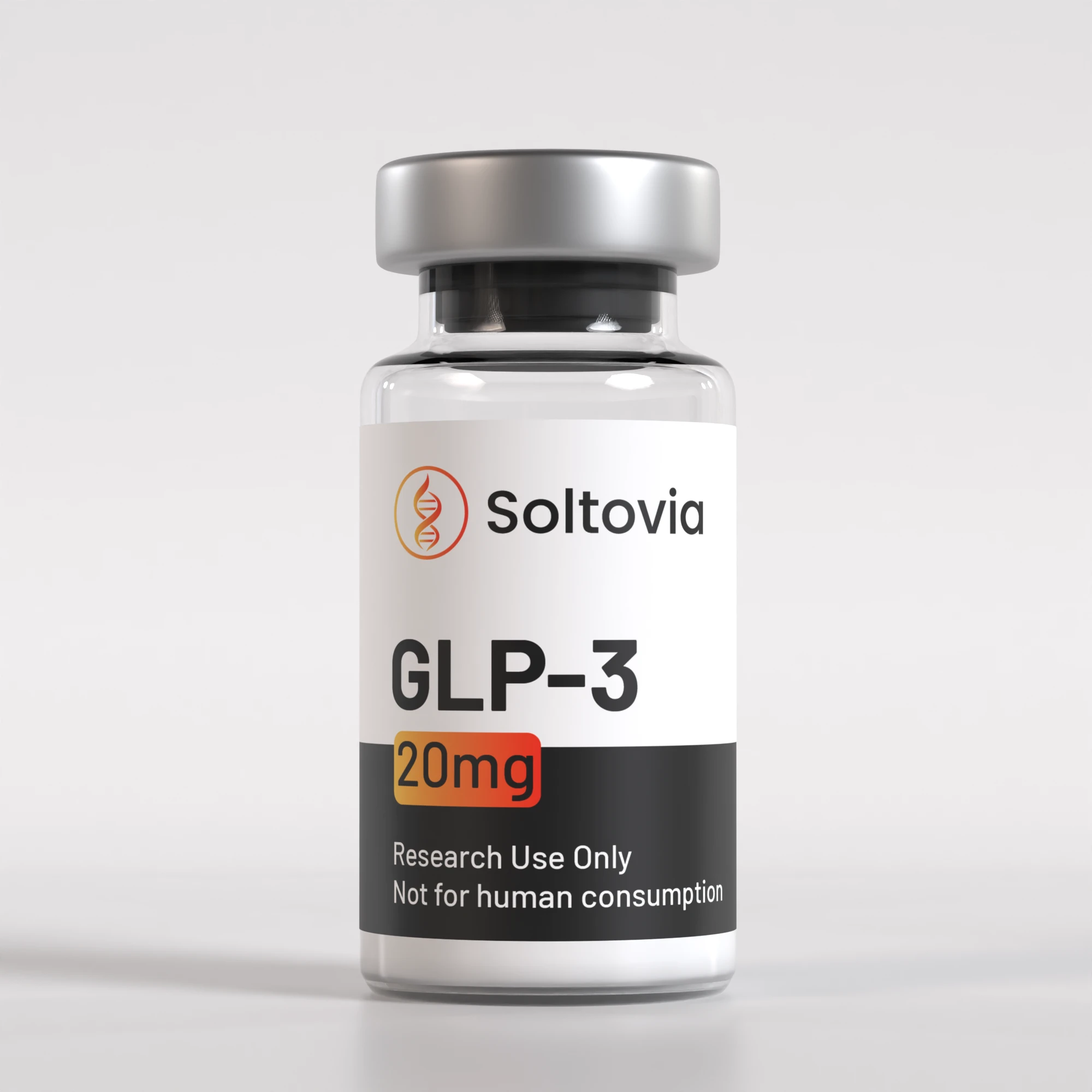
GLP-3
GLP-3 is a catalog-designated research peptide product intended exclusively for controlled laboratory and analytical investigations involving molecular characterization, metabolic receptor-interaction models, cellular signaling pathways, and experimental assay evaluation. Its precise chemical identity must be confirmed through product documentation.
$65.00 – $110.00Price range: $65.00 through $110.00
Satisfaction Guaranteed
Secure
Payment
Third-party
Tested
Research Use Disclaimer
Research Use Only: All products offered are intended strictly for laboratory research purposes. Products are not for human consumption and are not intended for diagnostic, therapeutic, or medical use. By purchasing from our website, customers confirm they are qualified researchers or laboratories and understand the intended research-use designation.
GLP-3
GLP-3 is a catalog-designated research peptide product intended exclusively for controlled laboratory and analytical investigations involving molecular characterization, metabolic receptor-interaction models, cellular signaling pathways, and experimental assay evaluation. Its precise chemical identity must be confirmed through product documentation.
Research Context
The term GLP-3 is sometimes used informally in research-peptide catalogs to describe experimental triple-receptor agonist compounds associated with glucagon-like peptide-1 (GLP-1), glucose-dependent insulinotropic polypeptide (GIP), and glucagon receptor signaling. Laboratory research involving verified triple-receptor agonists examines receptor-binding characteristics, intracellular signaling pathways, metabolic regulatory mechanisms, and peptide-associated biochemical interactions. GLP-3 is not an established scientific name for a distinct hormone or molecular compound.
Laboratory Research Information
Laboratory studies may examine molecular identification, peptide stability, receptor-interaction models, intracellular cyclic AMP signaling pathways, and experimental assay behavior. Research may also involve analytical characterization, receptor-binding mechanisms, metabolic signaling pathways, and compound-specific biochemical interactions under controlled conditions. Receptor activity and molecular properties must be established from the verified identity of the supplied material. Observations should be interpreted within the design and limitations of the relevant experimental study.
Product Specifications
| Specification | Details |
|---|---|
| Product Name | GLP-3 |
| Brand | Soltovia |
| Compound Type | Research peptide; exact molecular identity requires verification |
| Research Profile | Metabolic receptor-interaction and cellular signaling research |
| Research Classification | Catalog-designated peptide research material |
| Potential Research Receptors | GLP-1R, GIPR, and GCGR, subject to compound verification |
| Molecular Weight | Refer to verified compound specifications |
| Molecular Formula | Refer to verified compound specifications |
| CAS Number | Confirm exact molecular identity |
| Amino Acid Count | Dependent on verified peptide structure |
| Research Pathways | Receptor-associated signaling and cellular metabolic regulation |
| Available Sizes | Refer to product variations |
| Purity | Refer to batch-specific COA |
| Testing Method | Refer to batch-specific COA |
| Laboratory | Refer to batch-specific COA |
For laboratory research use only. Not for human or veterinary use. This material does not provide medical or consumer-use guidance.

Research COntent
Investigational Triple-Agonist Overview
GLP-3 represents a next-generation investigational peptide engineered for coordinated triple-receptor agonism across GLP-1, GIP (Glucose-Dependent Insulinotropic Polypeptide), and GCGR (Glucagon Receptor) signaling cascades.
Multi-Pathway Mechanisms
- GLP-1R Signaling: Modulates glucose homeostasis and central satiety pathways.
- GIPR Co-Activation: Enhances insulin sensitivity and acts synergistically on lipid buffering within white and brown adipose tissue.
- Glucagon Receptor (GCGR) Modulation: Promotes mitochondrial uncoupling and substrate oxidation, leading to elevated basal energy expenditure in preclinical subjects.
Published Research Highlights
- Preclinical evaluations indicate superior metabolic rate acceleration compared to mono- and dual-incretin agonist controls.
- Exhibits marked reduction in hepatic lipid accumulation and improved glycemic curves in metabolic disease rodent models.
• Cell Metabolism: “Triple hormone receptor agonism accelerates energy expenditure and lipid clearance.”
• Molecular Metabolism: “Co-agonism kinetics of investigational GIP/GLP-1/Glucagon receptor peptides.”
Related Peptides
Related products
-
GHK-CU 100MG
$45.00 -

TESAMORELIN 10MG
$65.00 -
CJC/IPA (WITHOUT DAC) 5MG + 5MG
$65.00 -
GLP-1
$35.00