

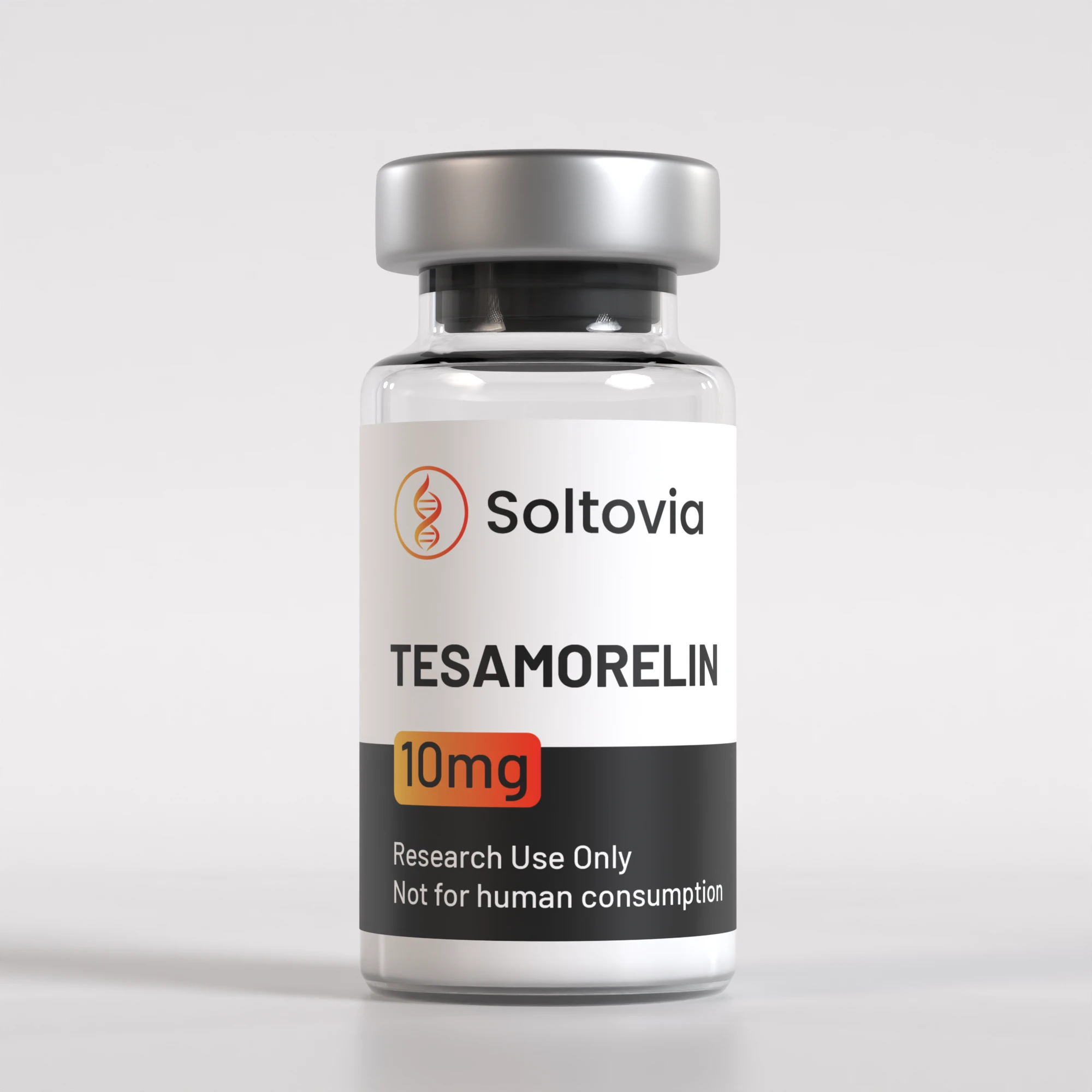
TESAMORELIN 10MG
Tesamorelin 10MG is a defined synthetic research peptide supplied exclusively for controlled laboratory and analytical investigations involving molecular characterization, growth hormone-releasing hormone receptor-interaction models, cellular signaling pathways, and experimental assay characterization.
$65.00
Satisfaction Guaranteed
Secure
Payment
Third-party
Tested
Research Use Disclaimer
Research Use Only: All products offered are intended strictly for laboratory research purposes. Products are not for human consumption and are not intended for diagnostic, therapeutic, or medical use. By purchasing from our website, customers confirm they are qualified researchers or laboratories and understand the intended research-use designation.
TESAMORELIN 10MG
Tesamorelin 10MG is a defined synthetic research peptide supplied exclusively for controlled laboratory and analytical investigations involving molecular characterization, growth hormone-releasing hormone receptor-interaction models, cellular signaling pathways, and experimental assay characterization.
Research Context
Tesamorelin is a synthetic 44-amino-acid peptide analogue of growth hormone-releasing hormone (GHRH), studied in laboratory research involving endocrine-associated molecular pathways, peptide-receptor interactions, and cellular signaling mechanisms. Its defined molecular structure supports controlled investigations of GHRH receptor-binding characteristics, intracellular cyclic AMP signaling pathways, and peptide-associated biochemical regulatory processes. Tesamorelin is investigated as a GHRH receptor agonist in experimental models examining receptor-mediated molecular communication and endocrine-associated signaling.
Laboratory Research Information
Laboratory studies may examine molecular identification, GHRH receptor-interaction models, intracellular signaling mechanisms, peptide stability, and experimental assay behavior. Research may also involve analytical characterization, receptor-binding properties, endocrine-associated molecular signaling, peptide-receptor interactions, and compound-specific biochemical processes under controlled conditions. Observations should be interpreted within the design and limitations of the relevant experimental study.
Product Specifications
| Specification | Details |
|---|---|
| Product Name | TESAMORELIN 10MG |
| Brand | Soltovia |
| Alternative Name | TH9507 |
| Compound Type | Synthetic growth hormone-releasing hormone analogue |
| Research Profile | GHRH receptor and endocrine-associated molecular signaling research |
| Molecular Weight | Approximately 5136 Da (reference peptide form) |
| Molecular Formula | C221H366N72O67S (reference peptide form) |
| CAS Number | 218949-48-5 (reference peptide form) |
| PubChem CID | 16137828 |
| Amino Acid Count | 44 |
| Research Receptor | Growth Hormone-Releasing Hormone Receptor (GHRHR) |
| Research Classification | GHRH receptor agonist research peptide |
| Research Pathways | GHRH receptor signaling, cyclic AMP pathways, and endocrine-associated molecular regulation |
| Available Size | 10MG |
| Purity | Refer to batch-specific COA |
| Testing Method | Refer to batch-specific COA |
| Laboratory | Refer to batch-specific COA |
For laboratory research use only. Not for human or veterinary use. This material does not provide medical or consumer-use guidance.

Research COntent
Synthetic GHRH Analogue Profile
Tesamorelin is a synthetic 44-amino-acid peptide analogue of Growth Hormone-Releasing Hormone (GHRH) modified with a trans-3-hexenoic acid moiety, providing enhanced metabolic stability against enzymatic breakdown.
Mechanisms of Action
- Pulsatile Somatotroph Stimulation: Binds specifically to pituitary GHRH receptors, stimulating the synthesis and pulsatile release of endogenous growth hormone (GH) without disrupting negative feedback loops.
- IGF-1 Modulation: Induces physiological upregulation of circulating Insulin-Like Growth Factor-1 (IGF-1) concentrations in laboratory models.
- Visceral Adipocyte Lipolysis: Studied for its selective mobilization of deep visceral adipose tissue via lipid oxidation pathways.
Laboratory Research Findings
- Significantly reduces visceral adipose depot volume without adverse alterations in subcutaneous fat reserves in clinical and animal studies.
- Demonstrates preservation of physiological glucose-insulin feedback mechanisms compared to exogenous somatotropin administration.
• Journal of Clinical Endocrinology & Metabolism: “Effects of a growth hormone-releasing factor analogue on visceral fat accumulation.”
• Growth Hormone & IGF Research: “Pharmacodynamics of Tesamorelin on pulsatile pituitary axis secretion.”
Related Peptides
Related products
-
KLOW 80MG
$120.00 -
TB-500 5MG
$45.00 -
GLP-3
$65.00 – $110.00Price range: $65.00 through $110.00Earn up to 55 points. This product has multiple variants. The options may be chosen on the product page -
BPC-157-10MG
$40.00